Skip to content


Table of Contents
Facial aging does not happen in one uniform way. Some people notice less definition along the cheeks or jawline, while others see deeper folds, volume loss, or changes in facial contours. Because these concerns develop differently, the right cosmetic treatment depends on what is actually creating the change.
A comparison of PDO Threads vs Fillers is useful because both treatments can support facial rejuvenation without surgery, yet they work differently. One focuses more on repositioning tissue, while the other restores or refines volume.
How do PDO threads and dermal fillers address different signs of facial aging?
PDO threads are designed to support and reposition mildly sagging facial tissue, while dermal fillers restore or refine volume in areas such as the cheeks, lips, chin, and facial folds. The best choice depends on whether the primary concern is skin laxity, volume loss, contour changes, or a combination of these concerns.
The Main Difference Is What Each Treatment Is Designed to Change
The difference between PDO threads and dermal fillers starts with their basic purpose. PDO threads are absorbable sutures placed beneath the skin to provide support and a lifting effect in areas with mild to moderate laxity.
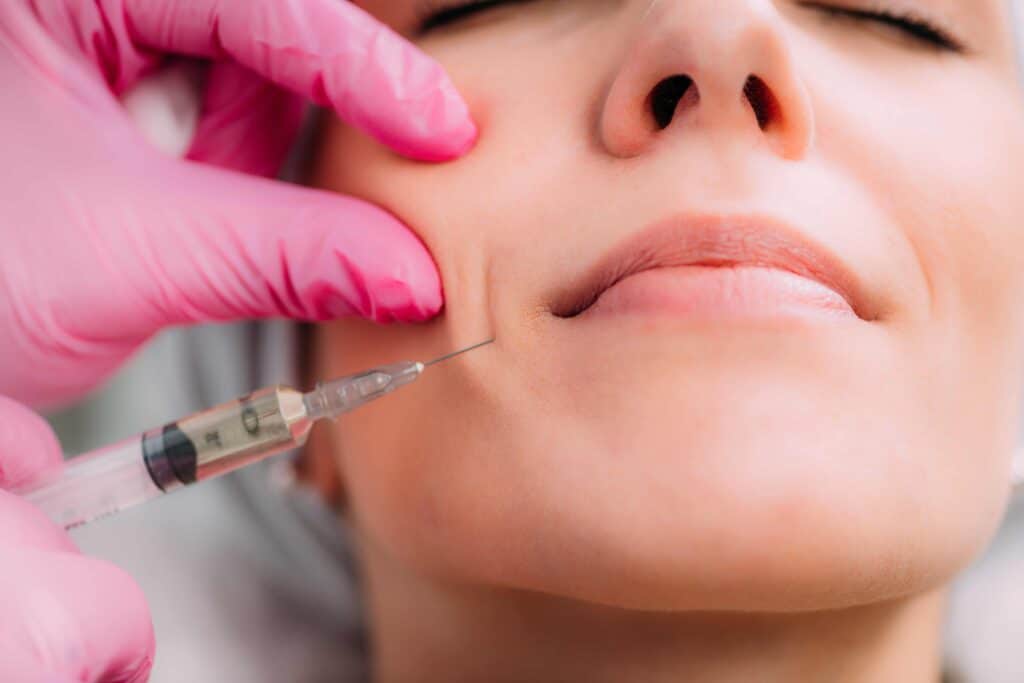
Dermal fillers are injectable gels placed beneath the skin to restore lost volume, soften certain folds, or improve facial contours.
This is why the PDO thread lift vs fillers discussion should begin with the concern being treated rather than which option is “better.”
When PDO Threads May Make More Sense
PDO threads may be considered when the main concern involves tissue that has started to descend rather than an area that simply needs more volume.
For someone comparing a thread lift vs filler for sagging skin, threads may be more relevant when repositioning is the primary goal.
A PDO thread lift Boca Raton consultation should also account for skin quality, degree of laxity, facial structure, and expectations.
When Dermal Fillers May Be the Better Match
Dermal fillers are often used when facial changes are related to volume loss. They may be used in the cheeks, lips, chin, jawline, or certain facial folds.
Careful placement can help restore proportions, support contours, or soften shadows that become more noticeable as facial volume changes.
Patients considering dermal fillers in Boca Raton, FL should expect treatment planning to focus on balance and placement rather than simply the amount of product used.
5 Factors That Can Help Guide the Choice
Choosing between threads and fillers usually depends on more than one feature. A provider may consider:
- Primary concern: Laxity may point more toward threads, while volume loss may be better suited to filler.
- Treatment area: Different facial regions respond differently to lifting, support, and volumizing techniques.
- Skin quality: Thickness and elasticity can influence how the face responds to treatment.
- Desired change: Some patients want contour refinement, while others are more concerned about tissue descent.
- Long–term plan: The best option may depend on how treatment fits with other facial rejuvenation treatments over time.
Can PDO Threads and Fillers Be Used Together?
In some cases, PDO threads and fillers can complement each other because they address different aspects of facial aging. Threads may help reposition tissue, while filler can be used selectively where volume support is still needed.
This combination may be discussed as part of a non-surgical facelift, but the term should not suggest the same outcome as facial surgery. The aim is to address specific concerns with techniques chosen for the individual face.
Treatment sequence can also matter, especially when both laxity and volume loss are present.
Choosing the Right Treatment Starts With Understanding the Concern
The most useful way to compare threads and fillers is to identify what is changing beneath the surface. Tissue descent, volume loss, skin quality, and facial structure may call for different treatment strategies.
PDO threads may be appropriate when repositioning and support are the main priorities. Fillers may be more useful for volume restoration or contour refinement. Some patients may benefit from a combination.
A consultation can help determine which option fits your anatomy, goals, and comfort level so treatment is based on your individual needs rather than a procedure trend.
Medbeautiq PDO Threads and Fillers in Boca Raton
At Medbeautiq, we provide comprehensive family health services with a specialized focus on women’s health and cosmetic dermatology. Our aesthetic care includes cellulite treatments, dermal fillers, botulinum toxin applications, pigmentary care, acne management, skin rejuvenation, scar revision, and laser therapies.
For patients considering PDO threads in Boca Raton, FL, cosmetic injectables in Boca Raton, FL, or a non-surgical facelift in Boca Raton, FL, we begin by identifying the concern and discussing the treatment options that may fit. Someone seeking jawline support may need a different plan from a patient interested in restoring cheek volume or softening facial folds.
Our team also offers functional medicine, medical weight loss, preventive care, and annual women’s health check-ups, with patient well-being guiding treatment decisions.
Ready to refresh your look? Book your consultation in Boca Raton, FL, to find out whether PDO Threads or Dermal Fillers are right for you.
Frequently Asked Questions
Are PDO Threads the Same as Dermal Fillers?
No, PDO threads are absorbable sutures used to support and reposition tissue, while dermal fillers are injectable products used primarily to restore or refine volume.
Which Lasts Longer, PDO Threads or Fillers?
Longevity varies by treatment area, product, technique, and individual response, so expectations should be discussed during a personalized consultation.
Can Fillers Lift Sagging Skin?
Fillers may provide structural support in selected areas, but they do not reposition lax tissue in the same way that a thread lift is designed to do.
Is a PDO Thread Lift Considered Surgery?
PDO thread lifting is generally considered a minimally invasive cosmetic procedure rather than traditional facial surgery.